L&Q is one of the UK’s largest housing associations. It says it houses around 250,000 people in more than 105,000 homes, and describes itself on its own website as a registered charitable housing association with a social purpose: providing homes and landlord services residents can be proud of.
That stated purpose is hard to reconcile with the experience described by some leaseholders at one of its blocks in south-east London.
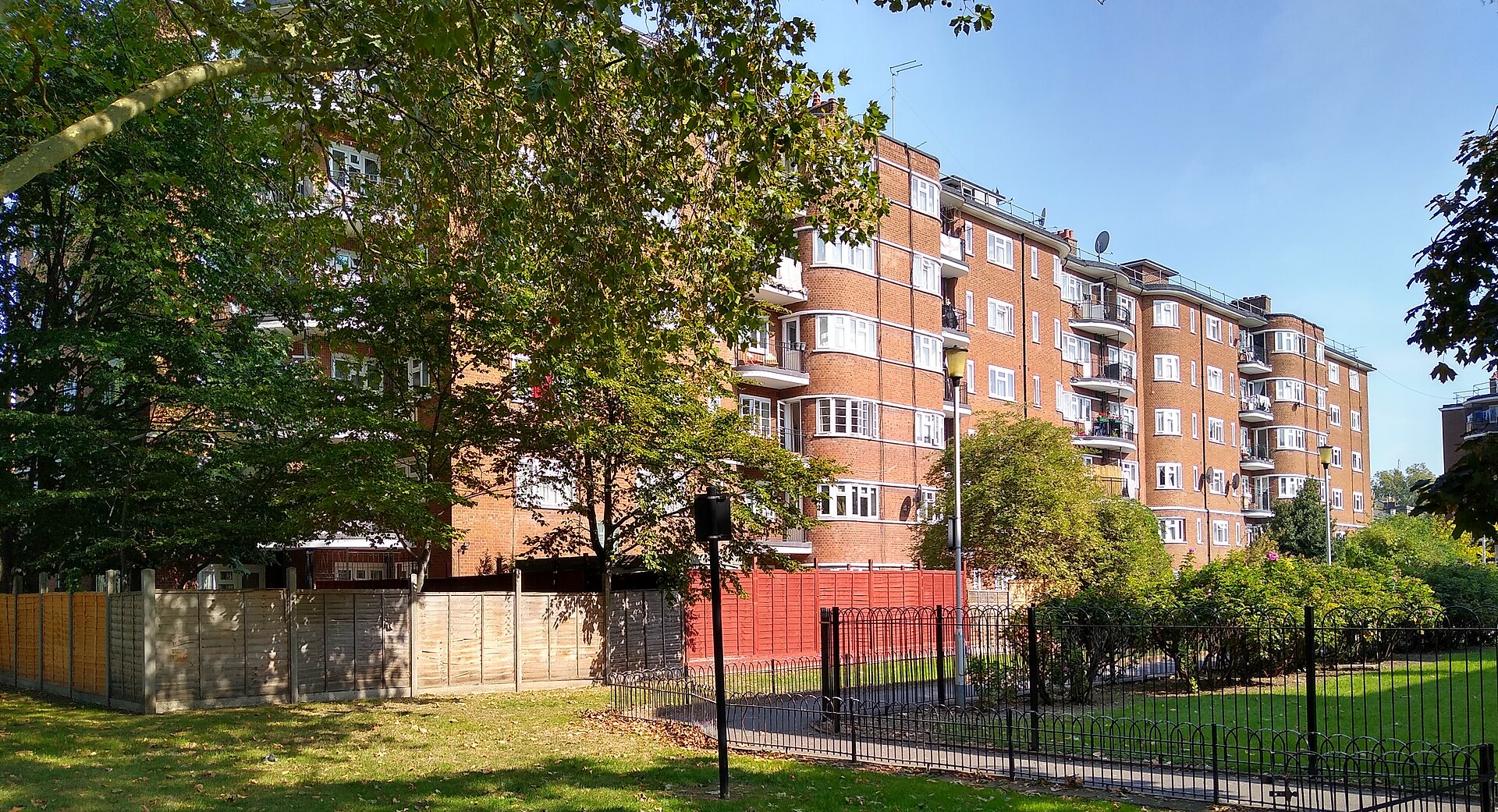
At Windley Close in Forest Hill, leaseholders say they have been left for years in a building without the safety paperwork needed to sell or remortgage normally. They say the block has had no valid EWS1 certificate for more than four years while the external wall system awaits remediation. L&Q’s own plan, residents say, involves removing and replacing the external wall system with non-combustible mineral wool. That raises an obvious question: why have residents been stuck for so long in homes that lenders will not treat as straightforward mortgage security?
The fire on 25 May 2026
On 25 May 2026, London Fire Brigade attended a fire at Windley Close. The Brigade’s public incident record says four fire engines and around 25 firefighters tackled a fire in a third-floor flat, that part of a three-roomed flat was damaged, that firefighters wearing breathing apparatus rescued a dog, and that there were no reported injuries. The first call was received at 18:40 and the fire was extinguished by 19:30.
Residents say something else happened that night. As far as they could tell, no communal alarm sounded. Some neighbours say they only realised there was a fire when they saw emergency vehicles outside. That allegation needs urgent, independent investigation. In a building already affected by external wall safety concerns, residents should not be left guessing whether a fire detection and alarm system worked when it mattered.
Residents also say that, four days before the fire, a London Fire Brigade fire safety inspecting officer had contacted L&Q directly about safety concerns at the block, and that they are still waiting for a clear account of what was done with that warning. L&Q should be asked to confirm the timeline, disclose its response, and explain whether any interim safety measures were considered or implemented before the fire.
A local story that fits a wider pattern
The Windley Close dispute should not be treated as an isolated customer-service problem. Public regulators have already raised serious concerns about L&Q’s performance.
In August 2025, the Regulator of Social Housing gave L&Q a C2 consumer grade and downgraded its governance rating from G1 to G2. The regulator said there were ‘some weaknesses’ in how L&Q was delivering the consumer standards, specifically in relation to safety and quality, and that improvement was needed. It also said L&Q needed to improve aspects of governance to support continued compliance.
That followed a damaging Housing Ombudsman special investigation in July 2023. The Ombudsman said L&Q had failed to address core issues and cultural failures, leading to a prolonged decline in services. Across 103 determinations between January and June 2023, the Ombudsman found a severe maladministration rate of 13%, more than double the national average of 6%. The cases covered disrepair, poor repairs, mishandled charges for leaseholders and failures involving antisocial behaviour. The Ombudsman ordered L&Q to pay £141,860 in compensation to residents.
These are not minor criticisms. They go directly to the essentials of being a landlord: safety, repairs, communication, transparency and accountability.
The EWS1 problem and the Tri Fire shadow
The Windley Close leaseholders’ inability to sell or remortgage sits within the wider post-Grenfell building safety crisis. For many flat owners, an EWS1 form is not a technical nicety. Without acceptable external wall safety documentation, lenders may refuse to lend and ordinary people become trapped in homes they cannot sell. The cost of fixing dangerous cladding has become a national problem; in 2025 the government moved towards a £5bn settlement with housebuilders over remediation.
A further complication has emerged around fire safety appraisals connected to Adam Kiziak and Tri Fire. In March 2025, the Institution of Fire Engineers said Mr Kiziak had been expelled after its disciplinary process. The IFE said the expulsion did not automatically invalidate historic assessments, but advised building owners and leaseholders who wanted reassurance to contact Tri Fire or appoint another assessor for a second opinion.
That distinction matters. An old assessment may not be automatically void, but if lenders lose confidence in the assessor or the firm behind the document, leaseholders still suffer the practical consequences. Reports across the fire safety sector and the national press have described lenders refusing to rely on some Tri Fire or Kiziak-linked EWS1 material, leaving affected leaseholders unable to move.
If L&Q relied on Tri Fire or Adam Kiziak for any part of the Windley Close fire safety or external wall process, residents deserve full disclosure. Who was instructed? What was the scope? What did the reports say? Were they relied on for safety decisions, mortgage documentation, remediation decisions or service charge expenditure? If the work later became difficult for lenders to accept, what did L&Q do to protect residents from the fallout?
Service charges while the building remains unresolved
Residents at Windley Close say their service charges have continued to rise while major safety and documentation problems remain unresolved. They have raised concerns about several items, including lift maintenance, management fees and building insurance.
One example residents cite is a 2020/21 lift maintenance estimate of £87.75 per unit followed by an actual charge of £877.48 per unit. Residents say this was a major overspend without adequate prior explanation. They also say management fees rose sharply over five years, and that building insurance charges require clearer disclosure, including any broker commissions or related payments.
Insurance costs are a particular issue in blocks affected by fire safety concerns. The Financial Conduct Authority found that mean premiums for multi-occupancy residential buildings rose by 125% between 2016 and 2021 across its sample, driven primarily by flammable cladding and other material fire safety risks. The FCA also found evidence of reduced insurance supply and a more complex, more expensive market for affected buildings.
Leaseholders should not be expected to accept opaque service charge demands on trust, especially where fire safety risk is part of the reason costs have risen. Under Section 21 of the Landlord and Tenant Act 1985, leaseholders have a legal right to ask for a summary of the service charge account. The Leasehold Advisory Service explains that landlords must provide the summary within the required time, and that failing to provide the information without a reasonable excuse can amount to breaking the law, with potential prosecution and a fine.
Residents say they used their statutory rights to ask for proper cost information, but that L&Q’s response was incomplete or treated the request under a narrower route. If that is correct, it is not just poor communication. It goes to whether residents are being given the legal transparency they are entitled to. Households elsewhere have fought similar battles over disputed bills and the right to a clear breakdown; our guide to challenging wrong bills and estimated charges sets out how UK consumer and billing law can be used to force disclosure.
Why residents end up going to MPs, tribunals and ombudsmen
The most damning part of stories like this is not just that something goes wrong. Buildings are complicated. Remediation is complicated. Insurance is complicated. But residents should not need to escalate to an MP, the Housing Ombudsman, the First-tier Tribunal and building safety routes just to obtain clear answers about alarms, cladding, contractors and charges.
At Windley Close, residents say they have escalated the matter to their MP, Ellie Reeves, and are considering or pursuing routes under the Building Safety Act 2022, the Landlord and Tenant Act 1985 and the Housing Ombudsman’s Complaint Handling Code. They also say L&Q rejected every point in its complaint response shortly after the fire.
L&Q is entitled to respond. It may dispute aspects of the residents’ account. It may say remediation depends on surveys, procurement, funding, access and regulatory process. It may say charges are recoverable and properly accounted for. It may say alarm arrangements are compliant. But a landlord of L&Q’s scale should be able to answer those points clearly, quickly and with evidence.
What L&Q should now be asked to provide
For Windley Close, the immediate requests are straightforward:
- An independent inspection of the fire detection and alarm arrangements, with the findings shared with residents in writing.
- A clear remediation timetable for the external wall system and a target date for acceptable EWS1 documentation.
- Full disclosure of the contractors and consultants instructed on the external wall and fire safety work, including qualifications, scope of work and any damage caused during investigations.
- A transparent service charge breakdown, including insurance, commissions, management fees and major works costs.
- A pause or sensible handling of disputed sums while statutory and tribunal routes are live.
- A named senior L&Q officer accountable for resolving the Windley Close case.
More broadly, L&Q should explain how it is addressing the weaknesses identified by the Regulator of Social Housing and the Housing Ombudsman. Residents do not need another corporate statement about listening. They need documents, dates, accountability and evidence that safety concerns are being acted on.
L&Q’s social purpose is not measured by what it says on its website. It is measured by what happens when a building has unsafe cladding, disputed charges, delayed paperwork, contractor damage, and then a fire.
At Windley Close, residents say the alarms stayed silent. L&Q should be asked to prove exactly what happened, what it knew before the fire, and what it is doing now to make the building safe, mortgageable and properly accountable to the people who pay for it.