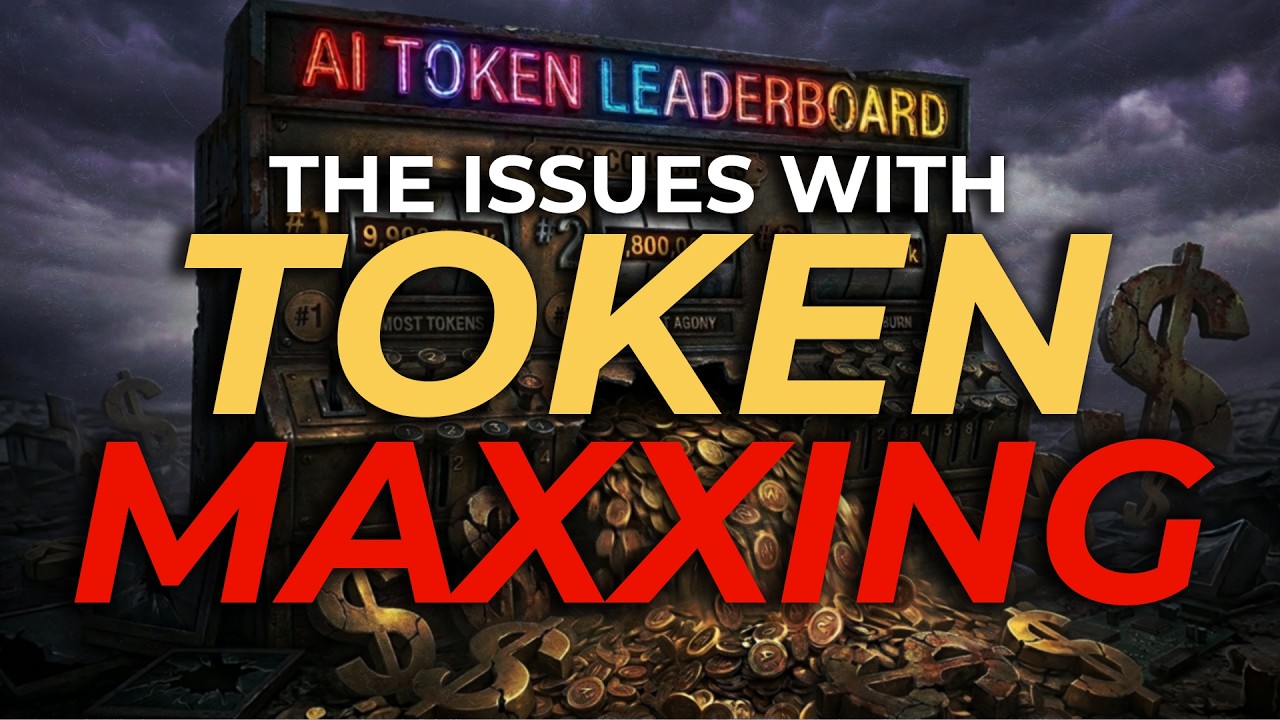
Meta employees consumed 73.7 trillion AI tokens in a single 30-day period in early 2026, a bill of roughly $221 million at list price, or about $2.65 billion a year. The figure was not an accident of accounting. It was tracked, published and celebrated on an internal leaderboard that ranked the company's own engineers by how much compute they burned.
The dashboard was called Claudeonomics, named after Anthropic's Claude model and built by a Meta employee rather than mandated from above. It ranked the company's more than 85,000 employees by token usage and handed out titles such as "Token Legend" and "Cache Wizard". Mark Zuckerberg reportedly did not make the top 250. Some employees gamed the ranking by leaving idle agents running all day, inflating their usage for no purpose beyond the score.
In June 2026 an investor account, CDM Capital, described the human cost of that incentive. A senior Meta engineer, it claimed, had spent about $90,000 on tokens in a single day and was fired a few days later. The account is second-hand and Meta has not confirmed it. It fits the documented pattern exactly. The person at the top of a leaderboard built to reward spending was the clearest example of why unlimited spending was a mistake.
The problem with rewarding inputs
What Meta ran is now known as tokenmaxxing: treating token consumption as a proxy for productivity and waiting for transformation to follow. The flaw is that tokens are an input. When an organisation rewards inputs, it gets more inputs. More drafts, more decks, more meeting summaries, more code that never ships. The leaderboard climbs while the business stays still.
Meta abandoned the experiment quickly. It shut Claudeonomics down within days of the story leaking, shifted from tokenmaxxing to token managing, and imposed spend caps. The London consultancy Elsewhen, which advises enterprises on AI operating models, has documented the same failure across the sector in a piece it calls the end of tokenmaxxing.
Uber said the quiet part out loud
Uber reached the same conclusion in public. In May 2026 its president and chief operating officer, Andrew Macdonald, told Fortune it was getting harder to justify the company's AI spend. "That link is not there yet," he said, adding that it was "very hard to draw a line between one of those stats and, okay, now we're actually producing like 25% more useful consumer features."
He had reason to ask. Uber had burned through its entire 2026 AI coding budget in four months, after encouraging adoption through, once again, an internal leaderboard ranking teams by tool usage. The share of Uber engineers using Claude Code rose from roughly a third in February to 84% in March. Typical bills ran from $150 to $250 per engineer a month, with the heaviest users reaching $2,000. The usage was real. The line to shipped value was missing.
The retreat is already under way
The pullback now extends across big technology. Microsoft spent late spring cancelling most of its internal Claude Code licences, moving engineers onto GitHub Copilot CLI by 30 June after token pricing pushed costs past budget months early. Amazon told engineers to stop using AI just for the sake of using AI once staff began deploying agents mainly to climb internal boards. Across the industry the phrase of the moment moved from "unlimited budget" to "spend cap" in a single quarter.
Why tokenmaxxing was never going to work
The failures share one structural cause. A frontier model arrives knowing everything about the world and nothing about a specific business. It does not know how the organisation runs, which data it can trust, or who signs off on what. Pouring tokens over that gap does not close it.
The clearest evidence comes from software, where AI is most mature. Researchers at MIT and Wharton tracked more than 100,000 developers across successive generations of AI coding tools. Those who adopted agentic tools wrote 741% more lines of code and opened 65% more pull requests. Shipped software rose just 20%. The upstream gain was large and real. It was almost entirely absorbed before it reached output, because the reviews, approvals and integrations downstream never moved. It is the same reason most enterprise AI projects still fail to reach production, and why the hard part of any rollout is moving a pilot into production rather than generating output in the first place.
This is the pattern of every general-purpose technology. Electric motors reached factories in the 1880s and barely touched productivity for forty years. The gains came in the 1920s, once factories were rebuilt around what the motor allowed: small motors at each workstation, and layouts organised by the flow of work rather than a central driveshaft. The redesign moved productivity, not the machine on its own. Tokenmaxxing does the opposite. It aims maximum capability at an unchanged operating model and hopes the model will do the redesign itself.
The companies now getting returns from AI look nothing like the leaderboard crowd. They are not posting rankings or running internal challenges. They are deciding what each agent is for, connecting it to trusted data, agreeing who gets to say no, and rebuilding the workflow around it. Meta already ran the other experiment. Its winner was the first one out the door.
Quick reference
- Dashboard name: Claudeonomics.
- Company: Meta.
- Reported period: a 30-day span in early 2026.
- Reported token use: 73.7 trillion AI tokens.
- Estimated list-price cost: about $221 million for the month, or $2.65 billion annualised.
- Core problem: token use was treated as an input metric, not a measure of shipped business value.